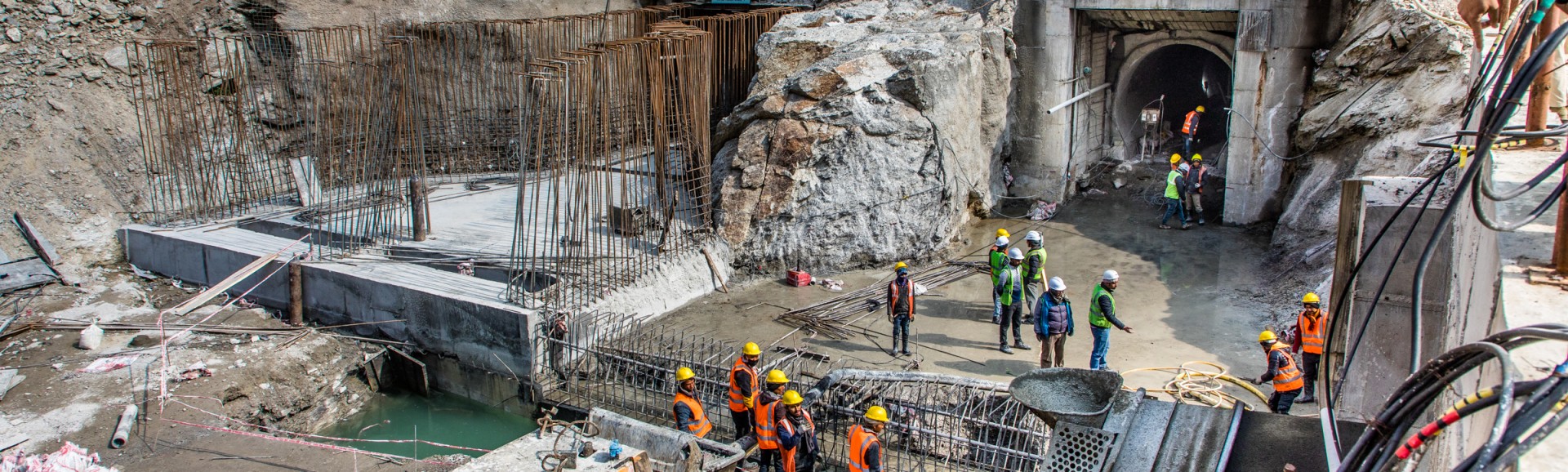
That can be because the country in question lacks financial infrastructure or is perceived as too “fragile” by private investors, because the investment concerns bold but unproven innovations with high potential, or because it requires a maturity period longer than what most investors dare to take on.
In short, we invest in entrepreneurs working in the world’s most challenging markets, who do not have access to commercial finance.
All our investments must be additional to what the market can provide and need to contribute to the UN Sustainable Development Goals. More specifically, we focus on Reducing Inequalities (SDG10), Climate Action (SDG13) and Decent Work and Economic Growth (SDG8). For every project or investment, we contractually agree with our client about the required improvements that need to be executed in the fields of human rights, environmental standards, and corporate governance. Within FMO, we have more than 70 employees dedicated to these environmental, social and governance (ESG) aspects of our transactions. We also consult external parties for additional research and independent advice. The whole decision-making process can take up from two months to four years, depending on the complexity of the project, the outcome of the preliminary investigation, the Due Diligence, and the required actions from external parties.
To ensure the company we finance is realizing the required improvements, we monitor the company for the duration of the contract. We provide extra financial support when needed.
The reality of our daily work is that we can never fully prevent incidents from occurring. What we can do is learn from what has occurred and evolve as an organization. We learn from our Independent Complaints Mechanism, from regular evaluations that are conducted for our full organization, from our partners, and from the international regulations to which we adhere. We learn the most from the dilemmas we face on a daily basis while working in these challenging business contexts; carefully weighing the interests of the broad group of stakeholders surrounding our projects.
Over the past 20 years, ESG has increasingly been integrated into our organization, investment process and business operations.
Please find below an overview of FMO’s measures to strengthen its ESG and Human Rights approach since 2016.
Improvements to the FMO organization
- FMO’s Supervisory Board has established an Impact Committee. The Impact Committee advises FMO’s Supervisory Board on its decision-making on Impact and ESG and carries out supervision of the Management Board on these topics.
- The creation of dedicated Impact and ESG Departments headed by Impact and ESG+ Directors, accountable to FMO’s Management Board via the Co-Chief Investment Officers. These departments connect over 80 professionals in FMO’s Technical Assistance team, Sustainable Finance Advisory team and ESG+ teams. The ESG+ Department employes over 40 Environmental & Social (E&S) Officers allocated to the four sector and product departments that are responsible for screening, assessing, structuring and monitoring FMO’s investments with respect to human rights and other environmental and social issues.
- The development of FMO’s Sustainability Information System (SIS) and new ESG Governance Structure to support consistency, accountability, and control. This has resulted in:
- A centralized digital system including all FMO’s portfolio ESG data that provides significantly improved visibility of portfolio ESG risk and has enabled the further improvement of FMO’s ESG target1.
- The creation of the ESG Manager role for each of the sector and product departments where we operate, the further clarification of all ESG roles and responsibilities and the embedding of these roles in SIS (approval) processes accordingly.
- A significant increase in Impact and ESG resources over the years.
- Building the human rights knowledge and capacity of our employees through:
-
- Mandatory human rights training for every single employee at FMO2.
- Advanced human rights capacity building for all our ESG staff, including advanced Human Rights training, the development of sector specific implementation guidance and coaching and mentoring by human rights experts3.
Improvements to FMO Sustainability Policy Framework, investment process and business operations
- Improvements to FMO Sustainability Policy Universe, reviewed on frequent basis:
- Strengthening the human rights lens to our ESG due diligence and stewardship by systemizing and enhancing the following for high-risk E&S transactions:
- Our requirements for contextual risk analysis.
- Our Broad Community Support check, including Free Prior and Informed Consent when required
- Our land rights assessments when required
- Stakeholder engagement to ensure multiple perspectives are heard.
- Our response to human rights defenders’ risk, including an early warning system and guidelines on how to respond if a threat against a human rights defender is received.
- A human rights toolkit is in place to support the implementation of the above.
Improvements in transparency and disclosure
- Ex-ante disclosure: (60 days for high E&S risk, 30 days for low E&S risk, and 15 days for Venture Capital) for investments, across FMO’s whole product range. FMO discloses planned investments before contracting to allow stakeholders in a potential investment to share their concerns with regards to the proposed investment. Exceptions are investments where listed entities are involved, investments where ex-ante disclosure would lead to disruption of a commercial process, investments that do not lead to new activities and Development Contribution transactions4.
- Ex-post disclosure: FMO’s whole product range is disclosed post contracting. This includes transactions that have not been disclosed prior to contracting. The only exceptions are non-financial development contributions or development contributions that benefit multiple customers.
- Enhanced disclosure channels on dilemmas FMO faces in issue projects on our website (see here for an example) and through structured and recurring dialogue with civil society organizations.
- Enhanced transparency on Impact and ESG performance in our external reporting. In earlier years we expanded the Impact and ESG performance sections in our annual reports, thereby providing more transparency about what is going on in our portfolio, including insight in how we consider ESG in investment decisions. Since 2024 we voluntary report in line with CSRD/ESRS. This includes the Sustainability Statement with dedicated social related chapters on Workers in the value chain, Affected communities, Consumers and end users.
Increased stakeholder engagement on human rights
- From 2018 to 2022, we engaged in structured and recurring dialogues with three civil society organizations in the Netherlands (Both Ends, Oxfam Novib, and SOMO) about developments within FMO, either on a policy or project level. We currently engage with them and other civil society organizations on an ad hoc basis.
- FMO participated in the Dutch Banking Sector Agreement on international responsible business conduct regarding human rights, which focused on the implementation of the OECD Guidelines for Multinational Enterprises and the UNGPs. This Covenant ended in December 2019. FMO remains committed to continuously improve implementation of its standards.
FMO measures to strengthen due diligence, monitoring and early warning mechanisms
- FMO has a robust process in place for due diligence on its clients. This process includes a full overview of the ownership structure of the potential client, detailed due diligence on the ownership, sources of funds, the activities of the entity and a thorough review of national and international media to identify potential bad press.
- FMO continues this due diligence during the client life cycle, including continuous monitoring of the customer relationship, transactions and screening in renowned databases. FMO does not only do this to preserve its integrity but also to be able to adhere to national legislation, requiring to report any indication of potential misuse of funds to the national authorities. FMO’s investment staff monitors whether the disbursed funds are used for the purposes as agreed in the loan agreements.
- FMO continues to strengthen its framework on client due diligence on an ongoing basis also taking into account the legislative developments in this respect. In addition, technological improvements and use of AI, allow for enhanced monitoring and oversight.
- FMO’s compliance department develops an annual Training & Awareness Plan, which is structured around a risk-based, targeted, and engaging approach. It includes mandatory e-learning modules and tailored in-person sessions that address key integrity risks. Specific trainings on Anti-Bribery and Corruption (ABC), Sanctions, fraud and identifying unusual transactions and reporting requirements to the Financial Intelligence Unit (FIU-NL) are delivered through onboarding, annual refreshers, and department-specific trainings. To enhance relevance and impact, the training is supported by practical case studies that reflect recognizable scenarios tailored to the specific functions and challenges of each department.
- FMO has a well-functioning Independent Complaints Mechanism in place. The ICM policy was developed in 2014, reviewed in 2017 and since 2022 we are undertaking an in-depth review with public commenting and stakeholder consultation. The update policy is expected to be finalized and published early 2026.
- In the annual report 2019 we announce this system, see this link last paragraph “ESG Performance – Results”
- Based on Annual report 2018 page 40
- Based on Annual report 2019 page 33
- A Development Contribution (DC) is an FMO product designed to complement investments by providing targeted support that reduces enterprise risks, creates value, and catalyzes impact for customers, prospects, and ecosystems in low- and middle-income markets.
|