

As world leaders gathered in Antalya for COP31, much of the debate has been on: how do we turn climate commitments into actions on the ground?
This year, the Turkish Presidency and UN Framework Convention on Climate Change have called for more concrete actions on climate finance, adaptation, and a just transition amongst other issues on the table.
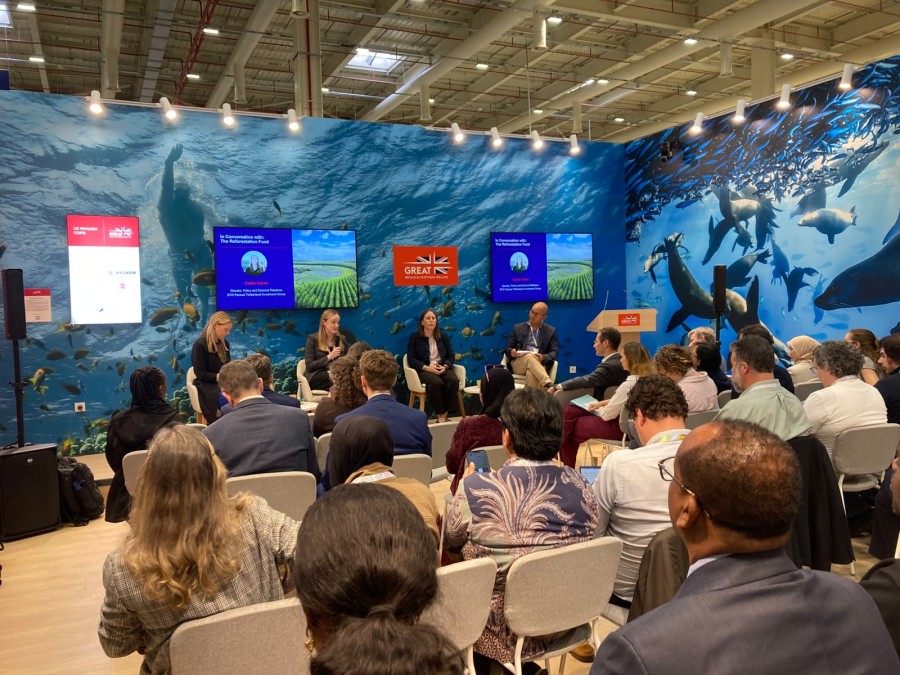
For forests, unlocking finance is central to this. Protecting and restoring forests, and building viable businesses around standing forests will require far more capital than public funding can provide alone. In order to mobilize the billions needed, a strong pipeline of investable opportunities is key. While public and concessional finance can help build that pipeline and manage early risks, private capital is needed to take successful models to scale.
On November 14th, Mobilising Finance for Forests (MFF) and Partnerships for Forests (P4F) brought together governments, investors, and businesses at the UK Pavilion to explore what it takes to move forest-positive opportunities from promising ideas to investments that deliver at scale. Key speakers included Hans Bogaard (FMO), Maggie Charnley (UK Government), Paul van de Logt (Dutch Ministry of Foreign Affairs), Grace Blackham (Responsible Commodities Facility, RCF), Caitlin Clarke (The Reforestation Fund, TRF), Charmian Love (Natura), Ruth Andrade (Lush), and Widharmika Agung (Partnerships for Forests).
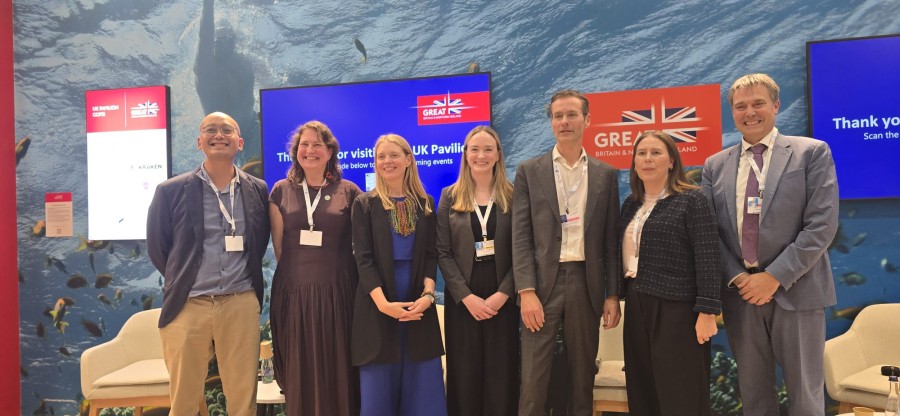
| From left to right: Widharmika Agung (Partnerships for Forests), Maggie Charnley (UK Government), Charmian Love (Natura), Caitlin Clarke (BTG Pactual), Hans Bogaard (FMO), Grace Blackham (Sustainable Investment Management), Paul van de Logt (Dutch Government) |
1. Public and concessional finance can bring private investors to the table. Used strategically, this capital can take on risks that commercial investors are not yet willing to bear, helping forest-positive businesses become more investable. Along the financing continuum, public funding can play a particularly important role at earlier and higher-risk stages. P4F, for example, helps build the pipeline of promising opportunities, while MFF provides concessional finance to help more mature businesses manage risk, scale and attract commercial investment. Caitlin Clarke gave an example of successful scaling in practice through TRF. MFF’s $40m catalytic investment helped them reach a first close of US$1.24bn early, making it the largest fund focused on reforestation and restoration. She stressed that early UK, Dutch, and FMO capital mattered not just for the investment terms but because the involvement of sophisticated investors gave commercial investors the confidence to follow.
“The big win is to get private finance to work in favour of keeping forests standing, while providing strong economic growth and livelihoods.” – Maggie Charnley, UK Government
RCF shared a similar lesson in a different context. Grace Blackham explained that the facility offers soy farmers lower-rate loans on the condition that they do not clear their land. This is only possible because of concessional funding and early buy-in from UK retailers including Tesco, Waitrose, and Sainsbury’s. The original public funding helped pull in private finance – every $1 of UK government capital draws $4 of commercial finance. This proof of concept helped secure a $85m approval from the Green Climate Fund (GCF) earlier this year.
“In three years' time, with all that concessional finance getting commercial investors on board, we can grow the fund to half a million dollars in size. That means we can have a hugely significant impact on deforestation and conversion free soy production in Brazil.” – Grace Blackham, Responsible Commodities Facility
2. Moving from innovation to scale takes more than one financial instrument, deployed in the right sequence. Programmes achieve more when they work together rather than in silos. Forest-positive businesses need different kinds of support as they grow, and no single programme can provide all of it. P4F incubates early-stage businesses, including smallholders and community partners, through grants and capacity development, while MFF picks up proven forest-positive models with concessional debt, equity and technical assistance. But although the programmes remain operationally separate, sharing knowledge and keeping channels of communication open allows each to do its job better, and gives the businesses that do mature a clearer path to scale.
“P4F and MFF - they clearly complement each other. Incubation and scaling are different worlds, but they need each other. Keep them operationally separate, but they need to be connected as well. Otherwise, there's no progression.” – Hans Bogaard, FMO
3. Market demand and traceability make forest-positive finance investable. A well-structured investment needs customers, credible data, and functioning supply chains to scale sustainably. For RCF, Grace noted building traceable soy supply chains was far harder than expected because soy mixes so easily, but three of their supply chains are now traceable, turning a challenge into an opportunity for visibility. The Q&A highlighted the recent end of the Soy Moratorium in the Amazon after government support was withdrawn. Although the policy did not cover the Cerrado, its collapse underscored a significant challenge: when laws and policies are absent, weakened or withdrawn entirely, commercial incentives (like those provided by RCF) become critical to keeping deforestation-free production viable, with predictable margins giving producers a reason to stay the course.
On the demand side, Ruth Andrade explained that Lush’s interest in niche ingredients such as illipe butter and marula oil demonstrates that a market does exist, but formulators need confidence in reliable production supplies before changing established recipes. The new B is for Bioeconomy campaign, led by the B Beauty Coalition, aims to aggregate that demand, and turn individual brand interest into a stronger market signal. For businesses and investors on the ground, clearer routes to market and more predictable demand can reduce commercial uncertainty and strengthen the case for investing in bioeconomy supply chains.
“We can’t do it alone – this is not a solo sport. This is a team, and we need active collaboration.” – Charmian Love, Natura
Looking ahead, proven and commercially-viable models in forestry are working with and in the absence of policies and regulations. In the closing remarks, Hans Boogard, FMO, reminded the room that investing in forestry is not a short-term endeavor and investors and businesses are still learning particularly around patient capital and environmental and social monitoring. If the right foundations are in place, successful models will travel and businesses not investing in nature will be left behind.
As consumers become more knowledgeable and intentional about their purchases, businesses and investments need to find ways to incentive forest positive activities. Turning COP31 pledges into lasting impact will mean pairing new public money with investable businesses, partnerships and demand that can bring private capital along.
In case you missed it, watch the session recording here

The Mobilising Finance for Forests (MFF) program is funded by the UK government and the government of the Kingdom of the Netherlands. To explore MFF’s wider fund structure, click here.