
De-risking capital is the kind that turns “too risky” into “investable,” strengthening Europe’s strategic position at the same time. In this op-ed first published on Devex, Michael shares his thoughts ahead of the first Transitioning Away From Fossil Fuels conference.

Development finance institutions, or DFIs, are the springboards for lower-income economies to transition away from fossil fuels. But even a DFI balance sheet stretches only so far.
So, if front-runner governments gathering in Colombia this week for the First Conference on Transitioning Away from Fossil Fuels want us to finance the transition in the more fragile countries, the European Union and its member states must put real de-risking capital on the table.
The Strait of Hormuz has been a reminder that geopolitical risk is also a cost-of-living risk. Disrupted shipping and pricier energy quickly translate into more expensive food. For households already spending a large share of their income on staples, that chain reaction is devastating. There is, however, a practical way for many lower- and middle-income countries to reduce exposure to this volatility: renewable energy.
Solar and wind are now among the cheapest sources of electricity in much of the world. Combined with storage, they can provide reliable power for industry, homes, and domestic fertilizer production and food value chains — our recent investment in ATOME’s green fertilizer plant in Paraguay is a good example. The business case for renewable energy improves further when countries reduce distortive subsidies for oil and gas and redirect support toward modern grids and storage.
In these markets, what often stands between a good idea and a built project is capital: construction finance, long tenors, local-currency solutions, and patient equity. This is exactly where DFIs add value.
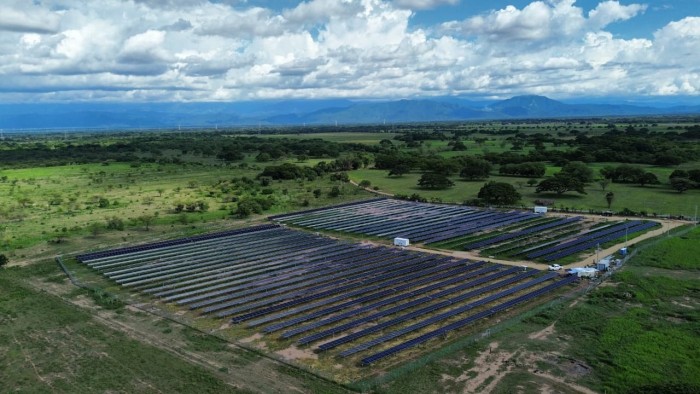
By providing long-term finance, we help credible developers reach financial close and crowd in commercial lenders, scaling clean power in volumes that materially reduce fuel imports and price shocks. But in fragile contexts, the picture is more complicated.
Projects face higher political, currency, and counterpart risk. Power purchase agreements typically rely on state-owned utilities whose payment capacity is often affected by crises. Government guarantees — the traditional way to backstop off-take risk — are harder to provide where debt distress limits fiscal space. Add thin domestic financial markets and higher costs of capital, and even strong renewable resources may not translate into viable business cases.
This means high-risk exposure for investors, which even DFIs have trouble absorbing. By way of illustration, FMO, the Dutch development bank, reported a profit of €48 million in 2025. Two failed energy investments in fragile contexts, and FMO’s profit turns into a loss.
That calls for a differentiated approach. In the more economically stable countries, we should use our capital more aggressively to finance (i) renewable generation, (ii) storage, and (iii) grid infrastructure at scale, mobilizing institutional investors alongside us.
In a more fragile context, the priority is to make projects bankable in the first place: stronger risk-sharing facilities, partial credit guarantees for utilities, foreign-exchange liquidity solutions, and more grant-funded technical assistance to prepare projects and strengthen regulators and system operators.
European DFIs have already committed — through the EDFI statement on climate and energy finance — to align new financing with the Paris Agreement and to focus our mobilization power on climate solutions.
Together, we invested €18.7 billion in climate action in 2024. The next step is to accelerate the energy transition, including in the most fragile contexts. This requires partnership: with private investors to build and operate assets, and with donor governments and EU instruments to provide the concessional layers — grants, guarantees, or first-loss capital — that lower risk and make private investment possible.
There is also a clear alignment with European self-interest here. If the EU aims to be seen as a credible geopolitical alternative to oil-rich (and capital-rich) nations, it must offer a compelling proposition to emerging markets. This means not only safeguarding the EU’s own energy transition by securing access to critical raw materials, but also actively investing in the energy transition of emerging markets, which, in turn, reduces the geopolitical leverage of oil-exporting nations.
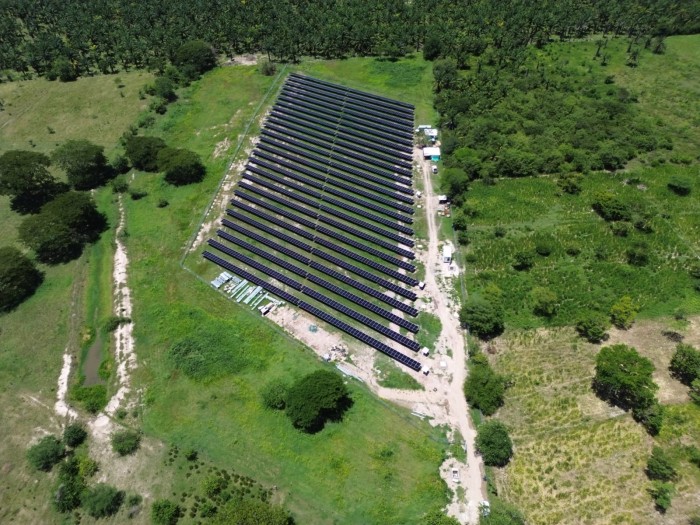
If we do not move fast enough, governments under pressure will keep reaching for the safety net: gas, oil, and coal. For example, Senegal is investing heavily in solar, yet has also added gas-fired power to stabilize its grid. Mozambique, facing repeated power shortages, again sees gas as one of the few options that can deliver electricity at scale in the near term. Similar debates are playing out across parts of Asia and Latin America. And let’s face it: No country has the right to question these choices without offering support to a viable alternative.
So, let us, DFIs, play our role: deploy our core capital to finance renewable energy in large volumes where markets can deliver, and work with donors, governments, and the private sector to provide the guarantees, concessional layers, and project preparation that make clean power possible, including in the more fragile countries. Reducing fossil-fuel subsidies and backing grids and storage will accelerate the shift. The faster we do this, the fewer countries will feel compelled to fall back on fossil fuels, and the less often families will pay for geopolitical risk at the dinner table.